Understanding the Catholic Journey of Prayer, Committal, Interment and Remembrance After Death
For many families in Singapore, the crematorium may feel like the final destination of a funeral.
The Funeral Mass has been celebrated. Family and friends have said their farewells. The casket makes its final journey to the crematorium and, after the prayers of committal, everyone begins to leave.
But from a Catholic perspective, our prayerful remembrance of the departed does not simply end at the crematorium.
The Catholic funeral is rooted in something much deeper: our faith in Jesus Christ, the Resurrection, the Communion of Saints and the Church’s continuing prayer for the faithful departed.
A Catholic Funeral Is More Than a Farewell
A Catholic funeral is not simply a ceremony to celebrate the life of someone we love.
It is an act of faith.
Christian funerals proclaim our hope that death does not have the final word. The Church accompanies the deceased with prayer while offering consolation and hope to those who mourn.
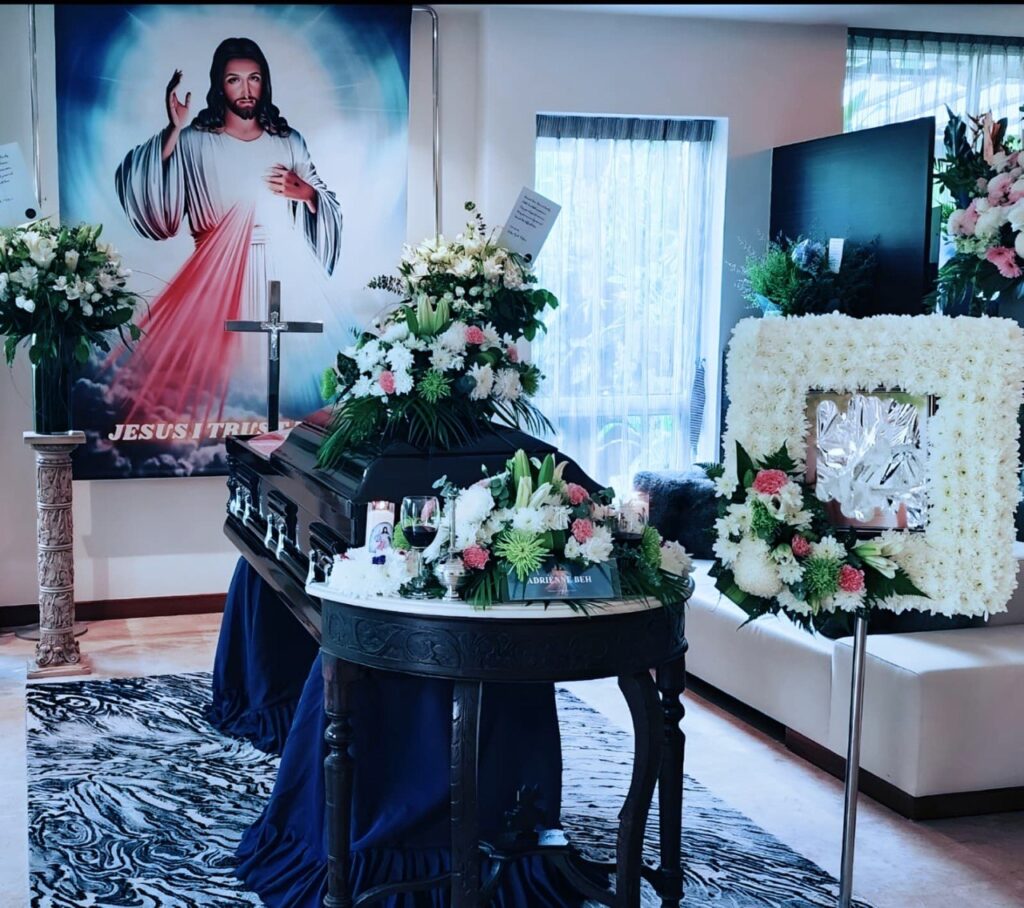
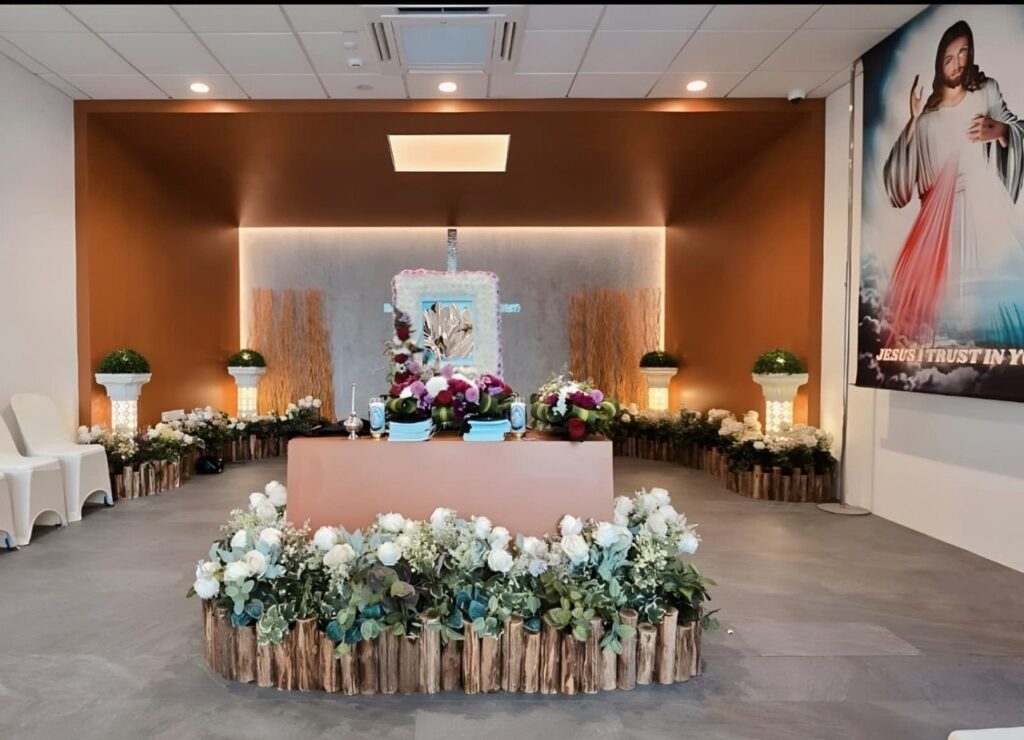
This is why a Catholic funeral should never be understood merely as a sequence of arrangements:
Wake → Funeral Mass → Hearse → Crematorium → Cremation
Behind these practical arrangements is a spiritual journey.
The family, parish community and Church accompany one of the faithful through prayer and entrust the deceased to the mercy of God.
The Funeral Mass: Entrusting the Deceased to God
For a Catholic, the Funeral Mass holds a particularly important place within the funeral rites.
The Eucharist is not simply included because it is Catholic tradition. At the heart of the Mass is Jesus Christ — His Passion, Death and Resurrection.
Therefore, while a funeral naturally contains sadness, memories and grief, its focus is ultimately Christian hope.
The Church gathers not merely to say:
“Goodbye.”
She gathers in faith to pray for the deceased and to entrust that person to God.
This is also why Catholic families in Singapore should involve the deceased’s parish early when making funeral arrangements.
Church guidance on Catholic funerals in Singapore emphasises the importance of contacting the appropriate parish before the funeral and cremation timing is finalised, so that the availability of the priest and the necessary liturgical arrangements can first be established.
For families, this is a simple but important practical principle:
Speak with the parish before confirming the cremation timing.
The Journey to the Crematorium Still Has Spiritual Meaning
After the Funeral Mass or Funeral Service, the journey to the crematorium can sometimes feel as though the religious portion of the funeral has finished.
It has not.
The Church continues to accompany the deceased to the place of committal.
At the crematorium, the prayers of committal mark a solemn moment in which the Church entrusts the deceased to God as family and friends make their earthly farewell.
These final moments should therefore not be regarded merely as the logistical conclusion of the funeral.
They remain moments of prayer, faith, dignity and Christian hope.
Cremation Is Permitted by the Catholic Church
There is sometimes confusion among Catholic families about cremation.
Some still believe that Catholics cannot be cremated.
That is incorrect.
The Catholic Church permits cremation, provided it has not been chosen for reasons contrary to Christian faith.
The Church nevertheless continues to prefer the burial of the body because of the symbolism it expresses concerning the dignity of the human body and Christian hope in the resurrection.
In Singapore, where cremation is common, understanding this distinction is particularly helpful.
Choosing cremation does not mean abandoning Catholic belief or Catholic funeral rites.
But cremation raises another important question:
What happens to the cremated remains afterwards?
Cremated Remains Are Still Treated With Reverence
Catholic teaching gives particular importance to the respectful treatment of cremated remains.
The Vatican instruction Ad resurgendum cum Christo teaches that when cremation has legitimately been chosen, the ashes of the faithful departed should ordinarily be laid to rest in a sacred place, such as a cemetery or another place designated for this purpose by competent Church authority.
Why does this matter?
Because Catholic teaching does not regard cremated remains simply as an object, possession or souvenir belonging to the family.
Respect for the deceased continues after cremation.
Providing a proper resting place also preserves something deeply important within Catholic tradition: prayer and remembrance.
A permanent resting place allows present and future generations to remember the deceased and, importantly for Catholics, to pray for them.
From Crematorium to Columbarium: Prayer Continues
This is one aspect of Catholic funeral tradition that families may not always hear much about when initially making funeral arrangements.
The Church’s prayerful care extends beyond the funeral day.
The journey can be understood in this way:
The Wake Prayer, presence and accompaniment.
The Funeral Mass or Funeral Service The Church gathers in faith and entrusts the deceased to God.
The Committal The Church prays at the place of committal as family and friends make their earthly farewell.
The Collection of the Cremated Remains The remains are received and continue to be treated with dignity and reverence.
The Interment The cremated remains are reverently laid to rest in their designated resting place.
Continuing Prayer The faithful departed continue to be remembered in the prayers of their family and the Church.
This is why we can say that, in an important sense, the Catholic funeral does not simply end at the crematorium.
After the Ashes Are Collected: Preparing for Interment
After the cremated remains have been collected, there is often another important stage — arranging for their reverent interment.
Where the family intends to place the urn in a Catholic columbarium, the Funeral Director can assist by liaising with the relevant parish office or church-appointed columbarium personnel regarding the available date, time and arrangements for interment.
Importantly, these arrangements should ordinarily be established with the church before the date and time are confirmed with the bereaved family.
This is because the interment is subject to the procedures of the particular church or columbarium and the availability of the priest, deacon or other person designated by the parish to lead the prayers.
Once the church has advised on the appropriate arrangements and availability, the Funeral Director can then coordinate with the family accordingly.
Not Every Catholic Parish Has a Columbarium
This is another practical point that families should be aware of.
Not every Catholic parish in Singapore has its own columbarium.
Where the deceased’s parish does not have a columbarium, the family may need to consider another Catholic columbarium where a niche is available and where the appropriate arrangements can be made.
The relevant church or columbarium should therefore be approached regarding its requirements, availability and procedures before plans are finalised.
At the appointed time, the family gathers once again in prayer as the cremated remains of their loved one are reverently placed into their resting place.
This may appear to be a simple practical step, but for a Catholic family it carries a deeper meaning.
The urn is not merely being stored or placed into a niche.
The cremated remains of someone they love are being reverently laid to rest, accompanied by prayer and remembrance.
For this reason, the Funeral Director’s responsibility may continue beyond the crematorium and the collection of ashes — helping the family coordinate this final practical stage respectfully with the church or columbarium.
The journey may therefore look more like this:
Death → Wake & Prayer → Funeral Mass → Committal → Cremation → Collection of Cremated Remains → Interment → Continuing Prayer & Remembrance
And even then, prayer for the faithful departed continues.
The Communion of Saints Changes the Meaning of Goodbye
Catholic faith gives us another beautiful way of understanding death: the Communion of Saints.
The bonds of the Church are not understood as simply disappearing at death.
Catholics continue to pray for those who have died.
We see this particularly in the celebration of All Souls’ Day, Mass intentions offered for the departed, anniversaries of death, visits to columbaria and cemeteries, and the private prayers of families.
A photograph may fade.
Flowers eventually wither.
The funeral wake eventually comes to an end.
But prayer can continue.
A Catholic Funeral Director Should Understand This Journey
For families arranging a Catholic funeral, practical coordination is certainly important.
Many things must happen within a very short period — documentation, preparation of the deceased, wake arrangements, transportation, parish coordination, Funeral Mass arrangements and cremation bookings.
Later, there may also be the collection of the cremated remains and coordination for their interment.
But Catholic funeral service should never become only about logistics.
A Funeral Director familiar with Catholic funeral practices should understand that the parish and clergy have their respective pastoral and liturgical responsibilities.
The Funeral Director’s role is to support and coordinate respectfully around those requirements, helping the family navigate the practical arrangements while respecting the Church’s rites and the directions of the parish.
This distinction matters.
The Funeral Director does not replace the Church.
Rather, good Catholic funeral coordination allows the family, parish, clergy and funeral team to fulfil their respective roles with dignity and with as little unnecessary stress as possible for the bereaved family.
Before Booking the Crematorium, Speak With Your Parish
One practical lesson deserves repeating.
Catholic families should contact the deceased’s parish before finalising the funeral and cremation timing.
The appropriate parish can advise on the availability of the priest and provide guidance concerning the funeral rites and parish arrangements.
This small step can prevent considerable difficulty during an already emotional period.
Likewise, after cremation, where interment in a Catholic columbarium is intended, the relevant church or columbarium should first be consulted regarding its procedures and available arrangements before a date and time are promised to the family.
In both situations, the principle is simple:
Let the Church confirm its arrangements first, and allow the Funeral Director to coordinate the practical details around them.
Death Is Not the End of Christian Hope
Perhaps this is what makes the Catholic understanding of a funeral so profound.
We grieve because someone whom we love is no longer physically with us.
But grief exists alongside hope.
The Catholic funeral does not pretend that death is insignificant. Neither does it treat death as the end of everything.
Instead, the Church brings us back to the mystery at the very centre of Christianity:
Christ has died. Christ is risen. And we live in the hope of the Resurrection.
So when the final prayers are said at the crematorium and the family begins the journey home, the Church’s prayerful remembrance of the faithful departed does not end there.
There remains prayer.
There remains remembrance.
There remains the communion of the Church.
And above all, there remains hope in Christ.
Frequently Asked Questions
Does the Catholic funeral end after the cremation? No. The Church’s prayerful accompaniment continues through the collection of the cremated remains, their interment, and ongoing prayer and remembrance for the deceased.
Can Catholics be cremated? Yes, cremation is permitted by the Catholic Church, provided it is not chosen for reasons contrary to Christian faith. The Church still expresses a preference for burial because of its symbolism, but choosing cremation does not mean stepping outside Catholic belief or funeral rites.
What should be done with a loved one’s ashes? Catholic teaching holds that cremated remains should ordinarily be laid to rest in a sacred place, such as a cemetery or a place designated by Church authority — most commonly a Catholic columbarium — rather than kept, divided, or treated as a personal possession.
Does every Catholic parish in Singapore have a columbarium? No. Where the deceased’s parish doesn’t have its own columbarium, the family may need to arrange a niche at another Catholic columbarium, with the church or columbarium consulted on procedures and availability beforehand.
When should the family contact the parish when arranging a Catholic funeral? As early as possible, and ideally before confirming the timing of the Funeral Mass and cremation, so the priest’s availability and the necessary liturgical arrangements can be settled first.
What is the Communion of Saints, and why does it matter for grieving families? It is the Catholic belief that the Church’s bonds with the deceased continue after death. Families keep this connection alive through All Souls’ Day, Mass intentions, death anniversaries, and visits to columbaria and cemeteries — prayer continues even after the wake and funeral have ended.
A Gentle Reminder for Catholic Families in Singapore
When a Catholic loved one passes away, contact the deceased’s parish early — ideally before confirming the Funeral Mass and cremation timing.
Allow the parish to guide the liturgical and pastoral arrangements while the Funeral Director assists with the practical coordination surrounding them.
After cremation, if the cremated remains are to be interred in a Catholic columbarium, consult the relevant church or columbarium regarding the available arrangements before confirming the interment date and time.
A Catholic funeral should bring together faith, prayer, dignity and compassionate care at one of the most difficult moments a family will experience.
About New Life Funeral Director
New Life Funeral Director assists Catholic families in Singapore with respectful funeral arrangements and practical coordination while recognising and respecting the pastoral and liturgical role of the Catholic Church, parish and clergy.
From the initial funeral arrangements and parish coordination through to the crematorium, collection of cremated remains and assistance with arrangements for interment, our purpose is to help families navigate the practical journey with dignity and respect for their Catholic faith.
Our approach is simple:
Serve the family. Respect the Church. Honour the departed.
Dum Spiro Spero — While I breathe, I hope.